On this page +
Match the movement to the work task
| Task | Practical constraint | Starting decision |
|---|---|---|
| Listening | One hand may be available | A roller or rubbing surface can be a candidate; check sound and your attention |
| Typing or mouse use | Hands may already be occupied | Put the handheld object down; reserve it for listening or breaks |
| Presenting | Speaking, controls and camera compete | Keep the tool accessible to set down; avoid mechanism noise near the microphone |
| Taking a break | The object can be the activity | Putty or shape-changing play need not be judged by work output |
Match the movement to your work
These are movement examples rather than proven focus aids. Compare similar tasks with and without a fidget → and record what changes →.
Which work tasks leave a hand free?
Consider sound, camera and microphone placement
Choose portability and care that fit your routine
Treat workplace focus claims cautiously
Relevant research and sources
A quantitative analysis of fidgeting in ADHD and its relation to performance and sustained attention on a cognitive task ↗
Participants moved more during correct trials; some movement patterns were associated with more consistent reaction times.
The limit: The study examined body movement, not commercial toys. Association cannot establish cause, and exclusions limit generalization to all adults with ADHD.
Putting a negative spin on it: Using a fidget spinner can impair memory for a video lecture ↗
Access scope: publisher bibliographic record checked 2 November 2026. The existing summary has not received a new full-text verification.
Spinner use was associated with more attentional lapses and poorer memory for video content.
The limit: Specific learning conditions; this does not test every fidget or establish effects for everyone with ADHD.
What does doodling do? ↗
The shading group monitored the message more accurately and recalled more information on a surprise memory test.
The limit: Structured shading during an auditory task differs from free drawing, reading or using a commercial fidget. It does not establish a universal memory benefit.
These studies do not test or endorse the commercial products shown on this page.
A few practical starting points
Selected for different preferences and documented features, not ranked by clinical benefit. We have not hands-on tested these products. Amazon links open Amazon.com; seller, price and availability can change.
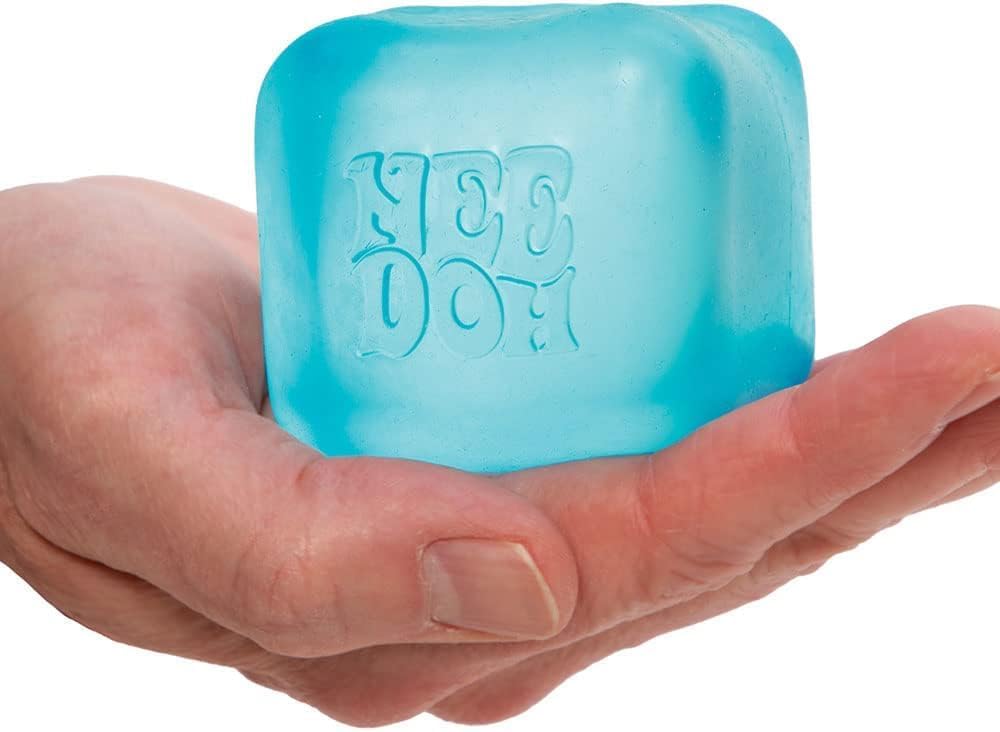
Schylling NeeDoh Nice Cube
For a dense, slow squeeze
Specifications
- 2.25-inch cube
- Manufacturer age label: 3+
A cube rather than a ball; squeeze feel changes with speed. Colors vary.
Meetings, typing and reading need different trials
During listening, check camera visibility, desk contact and whether the action interrupts others. During typing, a hand-held object competes for the hand you need; during reading, a visual mechanism may draw your eyes from the page. Compare a fixed texture, wearable ring or permitted foot movement rather than assuming one tool suits every task. See how to compare similar sessions.
Choosing with an older adult
Ask about preferred movement, comfort, grip and easy retrieval. Compare documented dimensions and weight with an object already comfortable to hold. A large grip may be preferred by one person and tiring for another. Do not infer needs from age or present a toy as rehabilitation equipment. If pain or a medical condition affects use, a product guide cannot determine an appropriate therapy.
Choose around what your hands need to do
Try a handheld movement while listening, then try it while typing. If it occupies the hand you need for work, compare a fixed texture or use the handheld object during breaks.
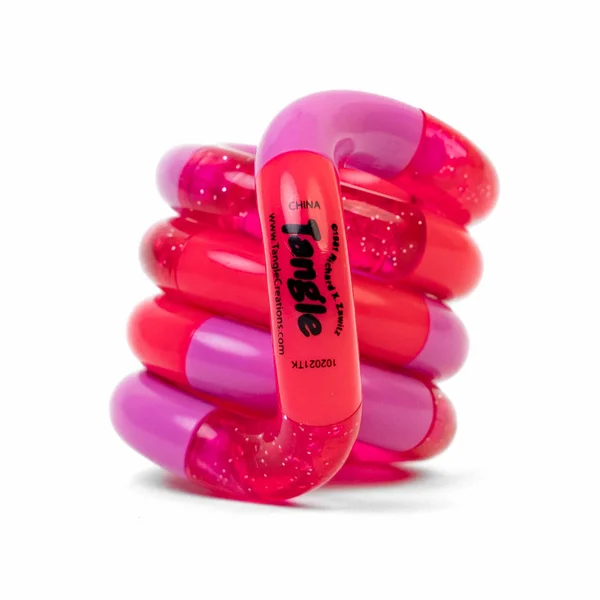
Tangle Jr. Classic / Neon
For repetitive twisting and reshaping
Specifications
- Coiled dimensions: 1.5 × 2 × 1.5 inches
- Uncoiled length: 7 inches
- Eighteen curved sections
- Separating sections: choking hazard under 3
Sections can separate, creating small parts. Image shows the Classic range; linked Amazon listing is the yellow/orange Neon variant.
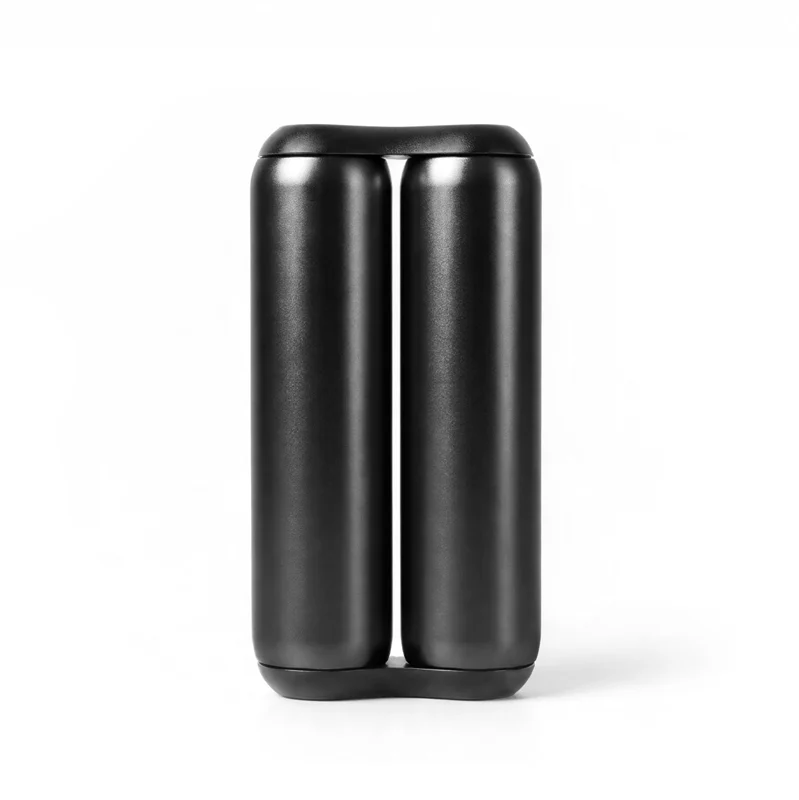
ONO Roller Aluminum
For continuous one-handed rolling
Specifications
- 6061 aluminum construction
- Full-size height: 3.4 inches
- Full-size weight: 6 oz
Full-size aluminum has noticeable weight. Image shows black; linked Amazon variant is sapphire.
Plain retailer links, with no affiliate tracking in this version. Photos are manufacturer or retailer images; colours and pack contents vary by listing. See individual product profiles for specification check dates.
Common questions
Is a fidget appropriate in a meeting?+
It depends on sound, the task and the meeting norms. A quiet movement that does not interfere with listening may be practical; check the setting.
What should I try while typing?+
Start without an object in your typing hand. Consider using a fidget during listening or a break instead of trying to combine incompatible movements.
See the types mentioned here
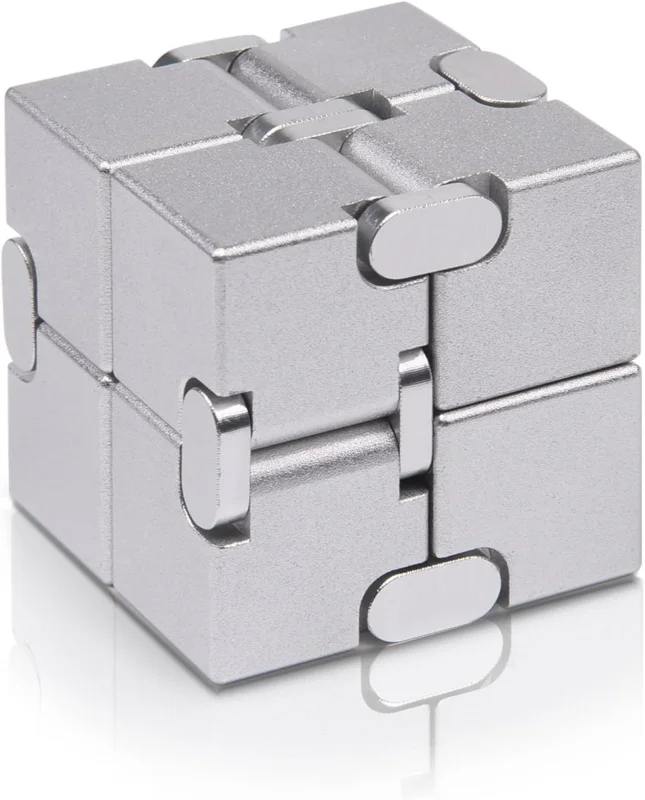
These examples illustrate the movements. They are not a recommendation that any product delivers a medical or learning benefit.
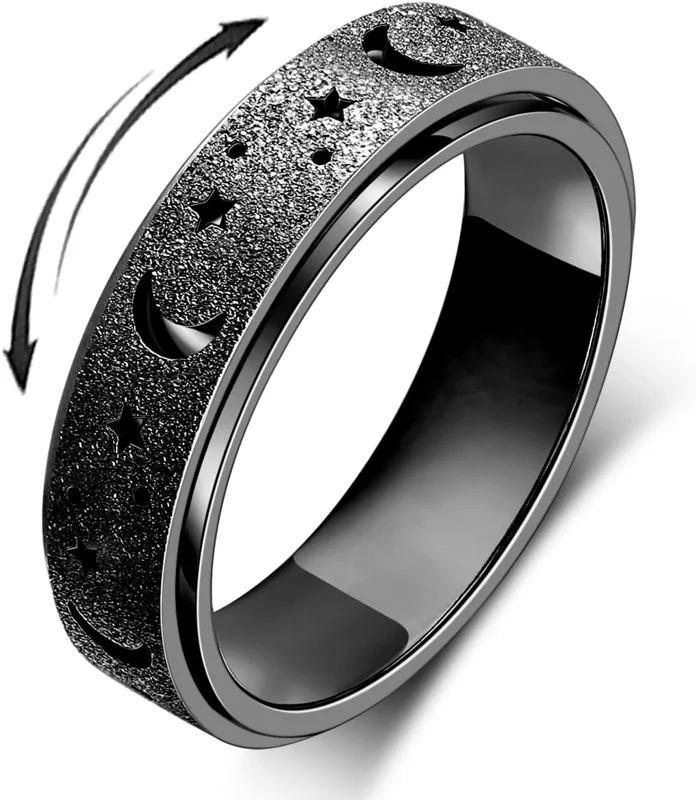
Continue with your next decision
Try the tool with a specific task.