On this page +
Agree the trial before sending a toy
| Agreement | What to decide | Example |
|---|---|---|
| Activity | Name one lesson or task | Listening to instructions |
| Use and storage | Agree when hands need to be free | Put it in its agreed place during handwriting |
| Observation | Use work and comfort, not stillness alone | Task completed; redirections; child’s preference |
| Review | Choose whether to keep, adapt or stop | Compare similar sessions, including without the object where agreed |
Compare classroom tradeoffs
These are movement examples rather than proven focus aids. Compare similar tasks with and without a fidget → and record what changes →.
How should a classroom fidget trial start?
Set simple use and storage rules
Take both positive and negative findings seriously
Review a few comparable sessions
Relevant research and sources
To Fidget or Not to Fidget: classroom evaluation of fidget spinners ↗
Spinner use was associated with poorer attention.
The limit: A young age group and specific classroom treatment context; not every fidget or use case was tested.
Using Fidget Spinners to Improve On-Task Classroom Behavior ↗
On-task behavior improved following rules and spinner introduction.
The limit: A very small sample; on-task behavior does not itself demonstrate improved learning.
The Effect of the Fidget Cube on Classroom Behavior ↗
The evaluation did not establish a consistent benefit to engagement or academic performance.
The limit: Specific classroom tasks and a small sample constrain generalization.
Using Fidget Spinners and Stress Balls Do Not Impact College Introductory Psychology Test Scores ↗
Access scope: publisher abstract checked 2 November 2026. It describes three minutes of use before a test, not use during study or the test itself.
The groups did not differ significantly in test scores.
The limit: Brief pre-test use differs from using a tool during studying. A nonsignificant finding does not prove exact equivalence, and this single study is not decisive.
Putting a negative spin on it: Using a fidget spinner can impair memory for a video lecture ↗
Access scope: publisher bibliographic record checked 2 November 2026. The existing summary has not received a new full-text verification.
Spinner use was associated with more attentional lapses and poorer memory for video content.
The limit: Specific learning conditions; this does not test every fidget or establish effects for everyone with ADHD.
Tools or Toys? Fidget Spinners, Bouncy Bands and Academic Performance ↗
Spinners and bouncy bands had overall negative performance effects. An exploratory analysis suggested a possible mathematics benefit from bands for children with greater inattention.
The limit: The subgroup result is exploratory, not a universal recommendation. Parent-reported symptoms do not equal clinical diagnosis.
Systematic review of sensory-based interventions for children and youth (2015–2024) ↗
Access scope: full-text record linked. A complete verification of the review methods and included studies is not recorded for this summary.
Results differed by strategy and participation goal. The review did not support a general claim that tactile fidgets improve attention.
The limit: Mixed interventions, variable outcomes and small studies constrain interpretation. Evidence for deep-pressure or caregiver interventions cannot be transferred to squeeze toys.
A Meta-Analysis of Fidget Devices as Academic and Behavioral Interventions ↗
Access scope: published abstract. Full-text review methods were not independently assessed for this summary.
The pooled effect was close to zero (Hedges’ g = -0.014), with substantial differences between individual study effects.
The limit: The pooled result combines different devices and outcomes. It does not rank retail toys or establish a benefit for an individual student. This summary is based on the published abstract.
These studies do not test or endorse the commercial products shown on this page.
Common questions
Should every student receive the same fidget?+
There is no evidence-based reason to assume one object suits every student. Individual preferences and classroom tasks differ.
Will it improve exam marks?+
That cannot be promised. One college study found no significant test-score difference after brief spinner or stress-ball use before a test.
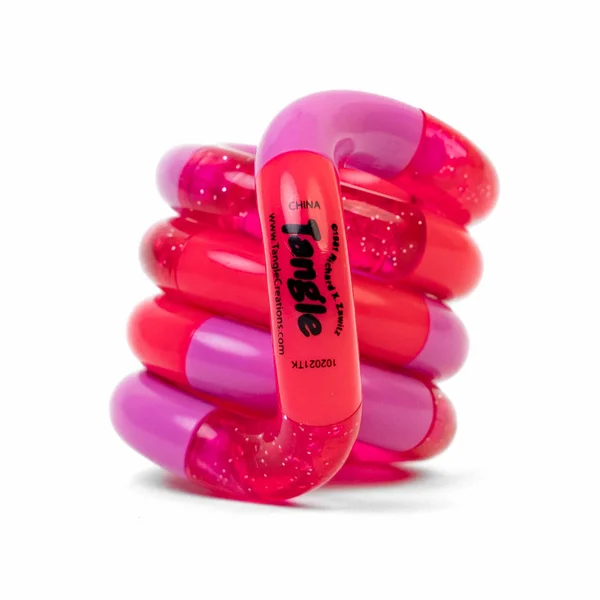
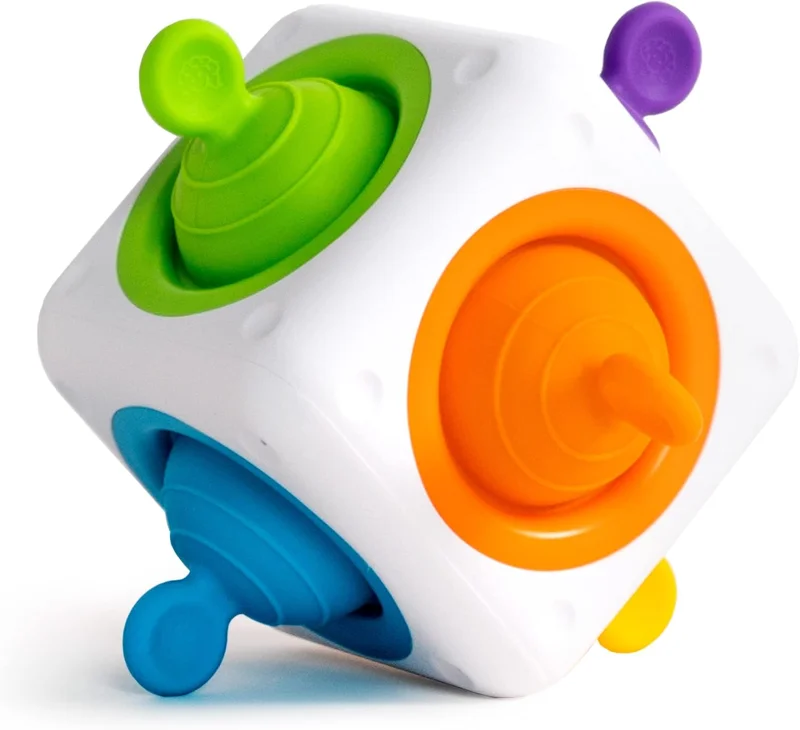
See the types mentioned here
These examples illustrate the movements. They are not a recommendation that any product delivers a medical or learning benefit.
Continue with your next decision
Agree an outcome and compare similar sessions.
Foot bands, rollers and swings
Foot tools move the activity away from the hands. Bouncyband’s desk range illustrates bands, rollers and swings; the range is a construction source, not independent proof of learning gains. Check chair or desk compatibility, secure fitting, floor contact and permission before trying one. Observe whether the movement shakes shared furniture or interrupts nearby people. A hands-free action can still distract.
Studying and exams: check permission first
A study preference does not establish permission in an exam. Check the institution’s current rules and any individual arrangements before bringing a tool. Practise with the permitted option in an ordinary study session. Compare interruptions and work completion, not only how much you like the object. Our research library does not establish that a retail fidget improves exam scores.
Agree on the task and the classroom rules
Ask the school where and when an object may be used. Agree on one way to tell whether it interrupts the task or nearby classmates. Revisit the choice after a short trial and include the student’s preference in the decision.