On this page +
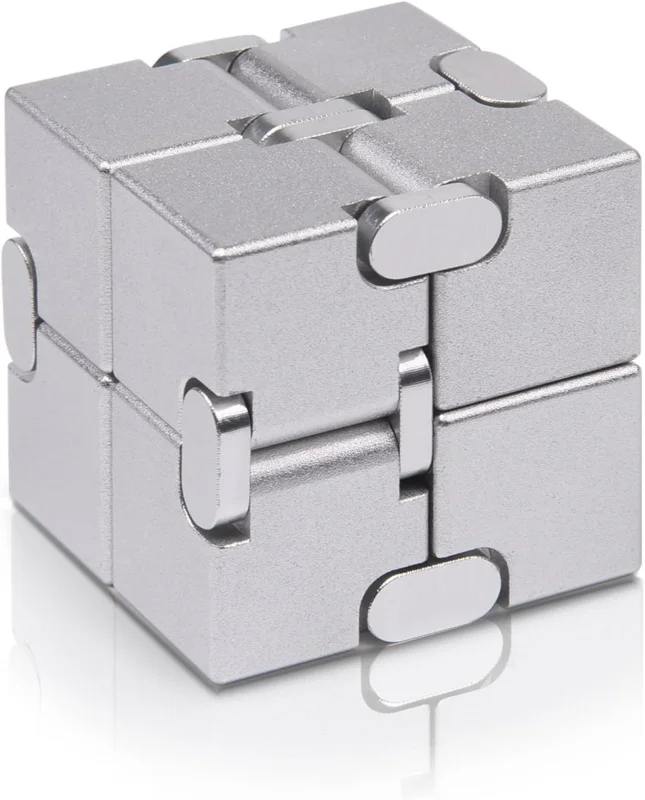
Different constructions in this category
| Construction | How it changes the choice |
|---|---|
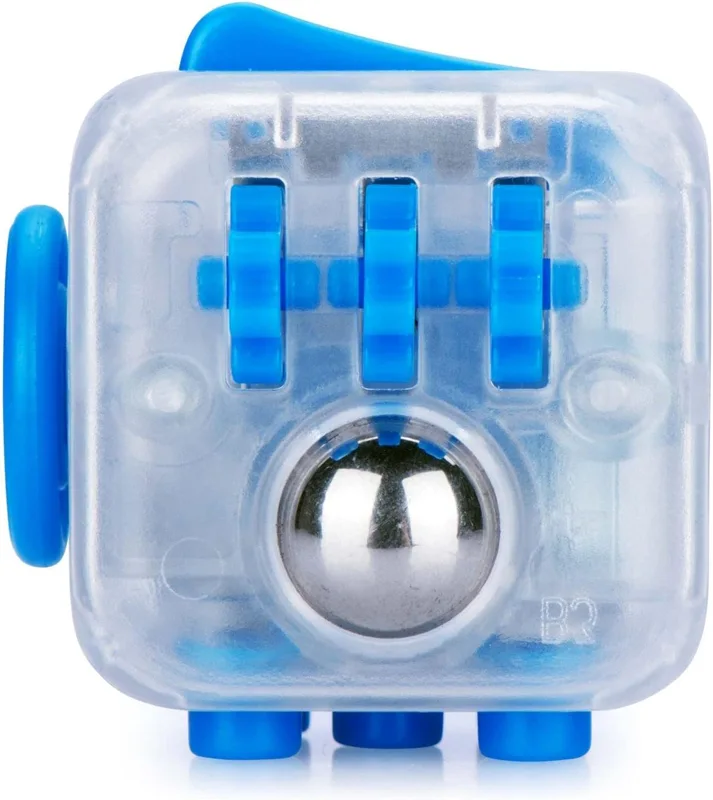
| Fixed control cube | Buttons, switches and rubbing surfaces share one body. Compare the particular control you plan to use. View the example → |
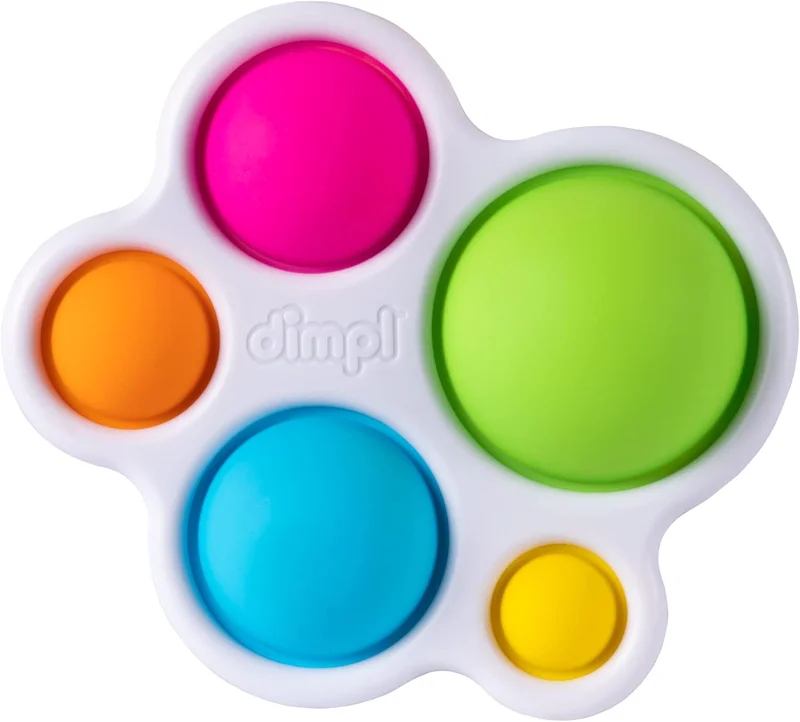
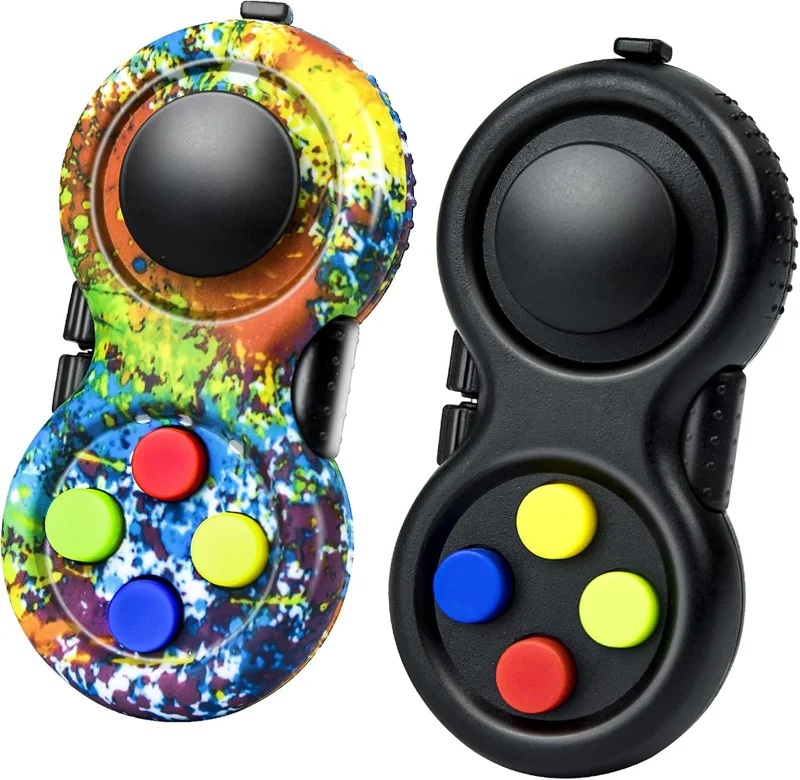
| Controller-shaped pad | A flatter control layout changes grip and access to buttons. Function count alone does not establish a better fit. View the example → |
| Pullable cube | Silicone components move through a frame; this differs from a switch or dial. View the example → |
Compare fidget cubes and pads before buying
Compare the product options side by side
These are sourced product options, not hands-on test rankings. Start with the movement you prefer and compare the tradeoffs. Read our editorial method →.
| Product | Why consider it | Tradeoff |
|---|---|---|
| Fat Brain Toys Tugl Cube → | For alternating push and pull movements | This is a silicone pull-and-pop cube, not a multi-switch click cube. Sound depends on use. |
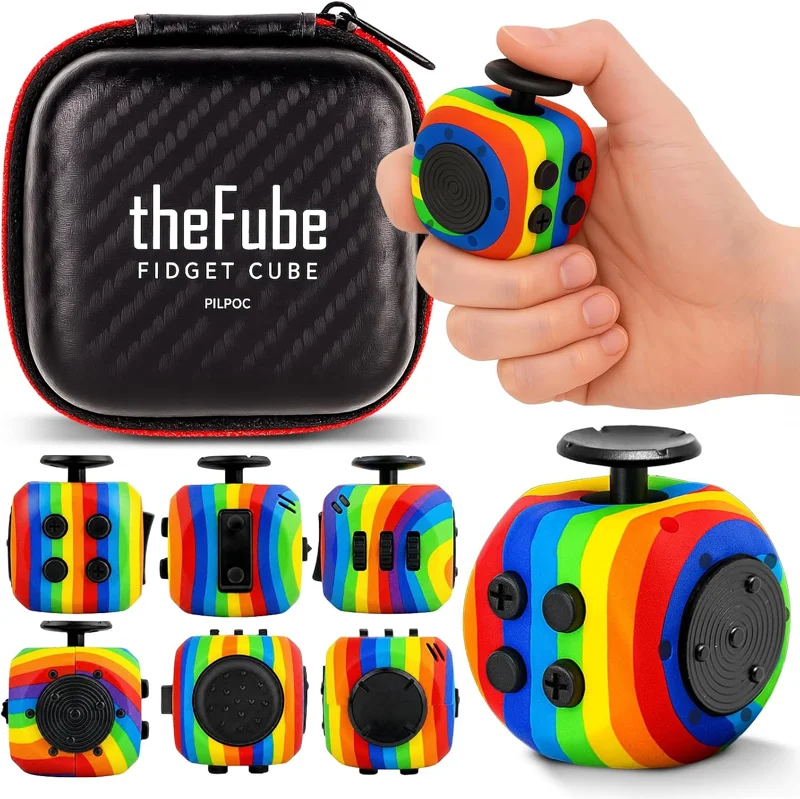
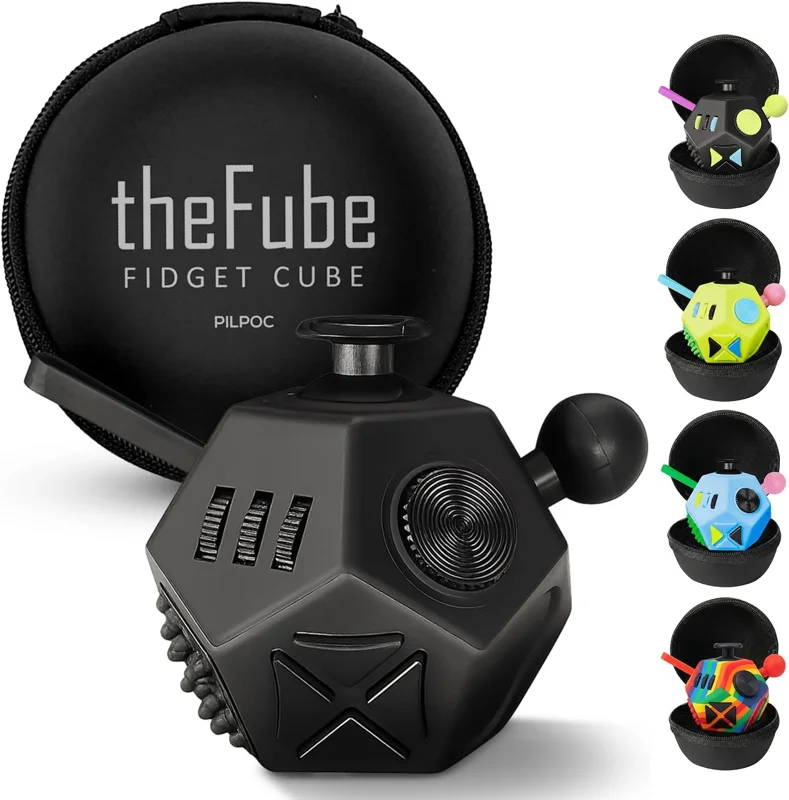
| PILPOC theFube Six-Sided Fidget Cube → | For comparing clicks, switches and rolling surfaces | Some sides click audibly. A quiet-side claim does not make every control suitable for a silent room. |
| ZURU Original Fidget Cube by Antsy Labs Blue → | For several controls in a compact six-sided cube | Some controls make sound. The linked blue model may be an imported listing; check seller, delivery region and exact variant. |
| WTYCD Controller Fidget Pad → | For a controller-shaped alternative to a cube | Some controls click while others are quieter. The lanyard and moving parts need care around children. |
| PILPOC theFube 12-Sided Fidget Dice → | For more control types than a standard six-sided cube | More sides can mean more looking down to switch actions. Clicks are audible and the object may feel bulky in a pocket. |
Terms used in this guide: Visual demand.
What matters when choosing a cube or control pad?
- Controls and movement
- Identify the controls you would actually use. A rolling ball, rubbing surface and switch provide different movements in the same object.
- Sound by control
- Test each control. A quiet side does not make a clicking switch silent, and sound can transfer through a desk.
- Size and grip
- Check the full dimensions and layout of the controls. A larger multi-sided device can require a different grip from a small cube.
For a repeating fold instead of several controls: infinity cubes →. For shared spaces, check how to assess sound →.
Movement and sound
The main action is click. Sound: varies by side. These descriptions are practical category guidance, not measurements of every product. Construction, force and the surface underneath change the experience.
Six sides is not six quiet options
Buttons, switches, gears and joysticks offer variety. Some sides click; some are intended to move more quietly. A quiet-use plan should specify the actual side being used. Avoid assuming that a label such as office toy means every action is discreet.
Variety can become task switching
A cube may be appealing if you want several movements, but moving between controls can become its own activity. Notice whether you keep looking down to find a side. For listening, a single familiar control may be easier to use without watching.
Choose a control, not just a cube
A six-sided button cube, a pullable silicone cube and a controller-style pad do different things. Check the controls you actually want and how much sound each makes. For hinge folding, use the separate infinity cube guide. Read how to check quietness before choosing a classroom tool.
Where this type might fit
Choose the control you intend to use, not just the number of sides. A quiet rubbing surface and an audible switch can share the same cube, so test the particular action rather than assigning one sound rating to the product.
What to check before buying
Some controls click loudly. Small parts can detach on poorly made versions.
- Compare the exact model’s dimensions and construction.
- Read age labels and small-parts warnings.
- Check care instructions and the seller’s return policy.
Try before you collect
Start with one object or borrow an appropriate clean tool. Compare similar tasks with and without it. Record comfort, interruptions and task completion. You do not need to keep using something simply because it is described as a sensory tool.
Keep reading
Child safety · Cleaning guide · What studies can tell us
Products to consider
Selected for different preferences and documented features, not ranked by clinical benefit. We have not hands-on tested these products. Amazon links open Amazon.com; seller, price and availability can change.
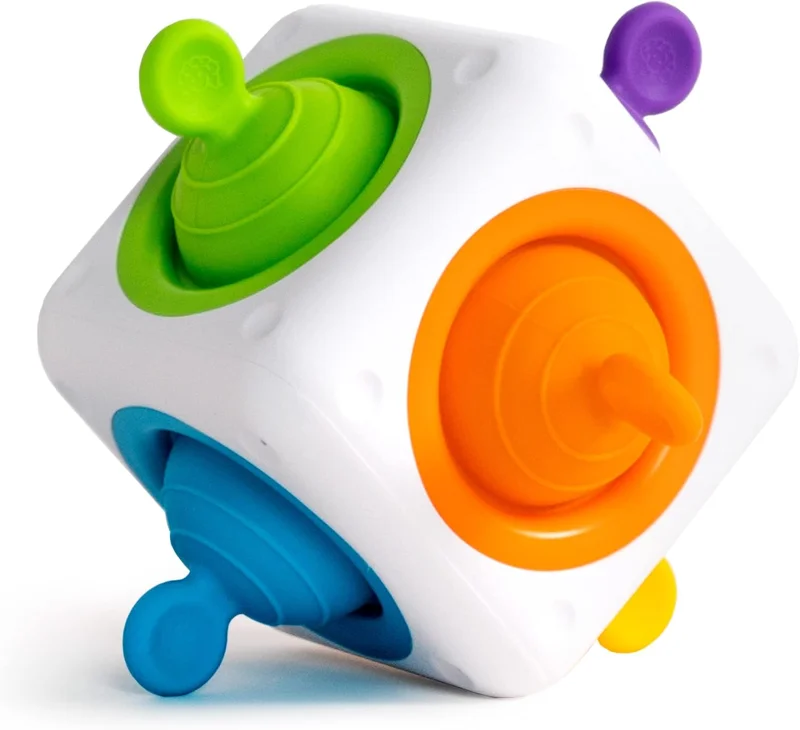
Fat Brain Toys Tugl Cube
Features, sources and buying details →View on Amazon ↗Specification source ↗Fidget pens versus cubes and clickers
A fidget pen combines a writing body with one or more moving controls. Compare the actual mechanism, not just the pen shape: a clip, rotating ring and keyboard switch create different actions. Consider whether using it interrupts writing and whether ink parts or caps detach. A dedicated clicker focuses on pressing one control; a cube offers several controls. Magnetic modular pens also require separate magnet checks.
Choose the control you will actually use
Try naming one motion you want to repeat. If it is a single press, compare a dedicated clicker. If you want to switch between pressing, rolling and rubbing, check the actual controls on the cube. Judge sound by the control you plan to use.
Plain retailer links, with no affiliate tracking in this version. Photos are manufacturer or retailer images; colours and pack contents vary by listing. See individual product profiles for specification check dates.
Relevant research and sources
Read the studies and their limitations
The Effect of the Fidget Cube on Classroom Behavior ↗
The evaluation did not establish a consistent benefit to engagement or academic performance.
The limit: Specific classroom tasks and a small sample constrain generalization.
CPSC: Small parts and choking hazard labeling ↗
The small-parts assessment includes entire objects, separate components and pieces that break off during simulated use or abuse.
The limit: A regulatory framework is not certification of products listed here. Requirements differ by country and exact product category.
These studies do not test or endorse the commercial products shown on this page.