You do not need a collection to try small movements. A comfortable hand movement, doodling during an appropriate task or a planned movement break may meet your preference. Judge whether it helps the activity you are actually doing.
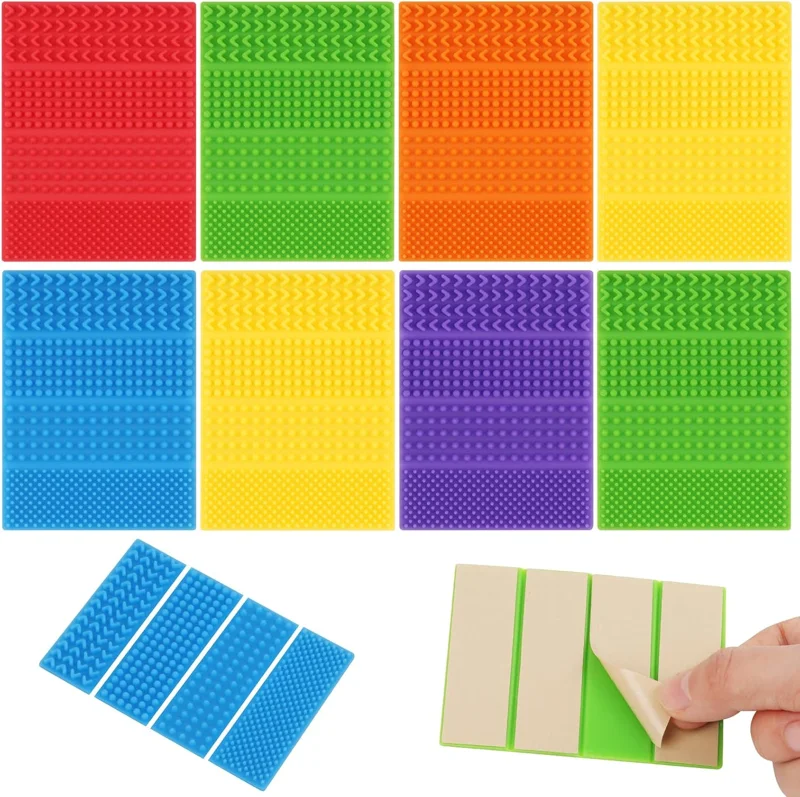
Example: STEFORD Silicone Textured Sensory Stickers. Shown to illustrate the topic.On this page +
Try a movement before purchasing
Try a movement before purchasing
Movement
No-buy example
Boundary
Rubbing
A comfortable clothing seam
Stop if it irritates your skin
Finger movement
A familiar gentle hand movement
Keep the main task easy to complete
Folding
Scrap paper during a suitable break
Do not assume it improves listening or learning
Whole-body movement
An appropriate stretch or short walk
Use a break when the setting permits
By Fidget-Tech · Published 26 October 2026 · Educational guide
Which movements can you try without a toy?
Before ordering a toy, notice comfortable movements that already happen during ordinary activities. You might rub a clothing seam, gently turn a ring you already wear or move your fingers while listening. Keep the movement comfortable and appropriate to the task. You do not need to assign a medical purpose to it. Avoid turning familiar objects with sharp edges, detachable parts or valuable mechanisms into improvised toys. A pen mechanism, for example, may be noisy or easy to lose. The point is to find a simple preference, not to create a substitute product with new practical problems.
Try an activity rather than an object
For a break, consider standing up, stretching comfortably or taking a short walk when the setting permits. During a suitable listening activity, simple doodling or folding scrap paper may be enjoyable, but notice whether it competes with following the speaker. Do not assume that every movement helps every task. Reading a difficult passage and listening casually are different activities. Choose the option that fits what you are doing and stop if it becomes another task to manage. A movement break does not need to be disguised as a productivity experiment to be a reasonable use of a break.
Avoid unsafe homemade fillers
A homemade stress ball is not automatically safer or cheaper once materials, supervision and breakage are considered. A balloon filled with loose material can tear, and its pieces or filling can be unsuitable around children, pets or anyone who mouths objects. Do not treat a social-media craft tutorial as a safety assessment. Loose magnets, water beads and detachable components are poor shortcuts for creating a sensory kit. If you want to make something, choose an age-appropriate activity with clear material guidance, supervise as required and consider the finished object’s failure points as carefully as a purchased toy.
Buy only when you can name what is missing
After trying a no-buy option, describe what a purchase would change: perhaps a quieter movement, a more comfortable surface, one-handed use or a cleanable object for travel. That gives the shopping decision a limit. You do not need several products to prove that one movement suits you. Movement research is not a requirement to own a commercial tool. If you cannot identify a practical reason to buy, keeping the money and continuing with the option you already enjoy is a complete outcome.
2015 · Laboratory study measuring movement, attention and phonological working-memory performance across tasks · Boys aged 8–12: 29 with ADHD and 23 typically developing
More movement predicted better working-memory performance in the ADHD group, but not normalized performance. Movement did not predict attention changes.
The limit: An association in a small all-boy sample, not a trial of fidget toys. It cannot establish that buying a toy improves attention.
2010 issue; online 2009 · Random allocation to shading printed shapes or listening without shading · 40 adults listening to a monotonous mock telephone message
The shading group monitored the message more accurately and recalled more information on a surprise memory test.
The limit: Structured shading during an auditory task differs from free drawing, reading or using a commercial fidget. It does not establish a universal memory benefit.
These studies do not test or endorse the commercial products shown on this page.
Common questions
Do I need a specialist sensory kit?+
No. A kit is one purchasing format, not a requirement. Start with the person’s actual preference and setting.
Can doodling replace a fidget?+
It may be an enjoyable option during some activities. Check whether it competes with the attention or hand use that the main task needs.
PUT THE GUIDE INTO CONTEXT
See the types mentioned here
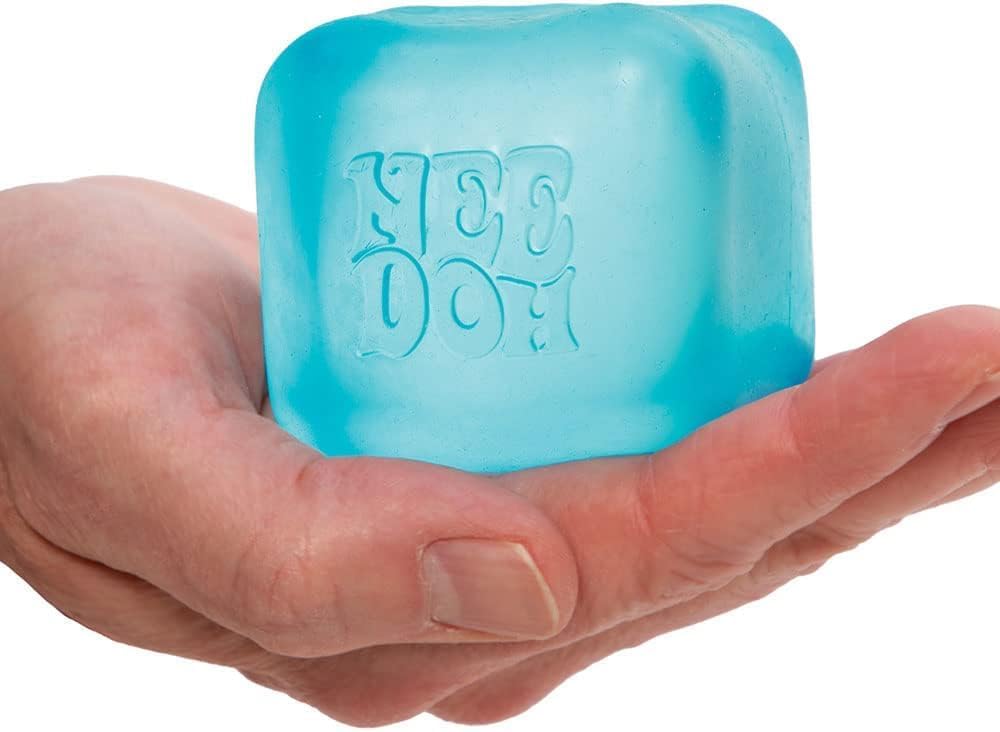
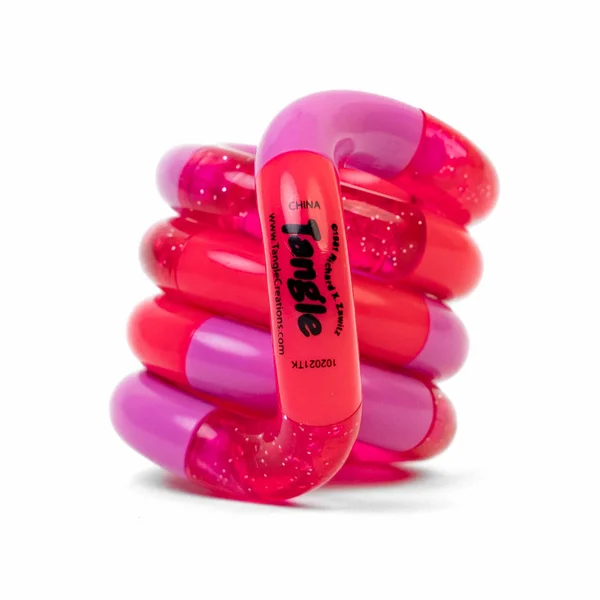
These examples illustrate the movements. They are not a recommendation that any product delivers a medical or learning benefit.
You do not need a homemade balloon-and-filler toy to try repetitive hand movement. Improvised skins and fillers lack the exact containment, age and care information needed for a meaningful comparison. Choose comfortable empty-hand movements or an appropriate intact object already available. Do not turn a no-buy trial into a heating, chemical-mixing or loose-filler project.
Try the movement with what you have
Pick one motion and try it during an ordinary task. For rubbing, try a comfortable fabric edge. For repeated hand movement, try a gentle finger motion without an object. Notice whether you can stop easily and return to the task.