On this page +
Compare stress balls before buying
Compare the product options side by side
These are sourced product options, not hands-on test rankings. Start with the movement you prefer and compare the tradeoffs. Read our editorial method →.
| Product | Why consider it | Tradeoff |
|---|---|---|
| Schylling NeeDoh Nice Cube → | For a dense, slow squeeze | A cube rather than a ball; squeeze feel changes with speed. Colors vary. |
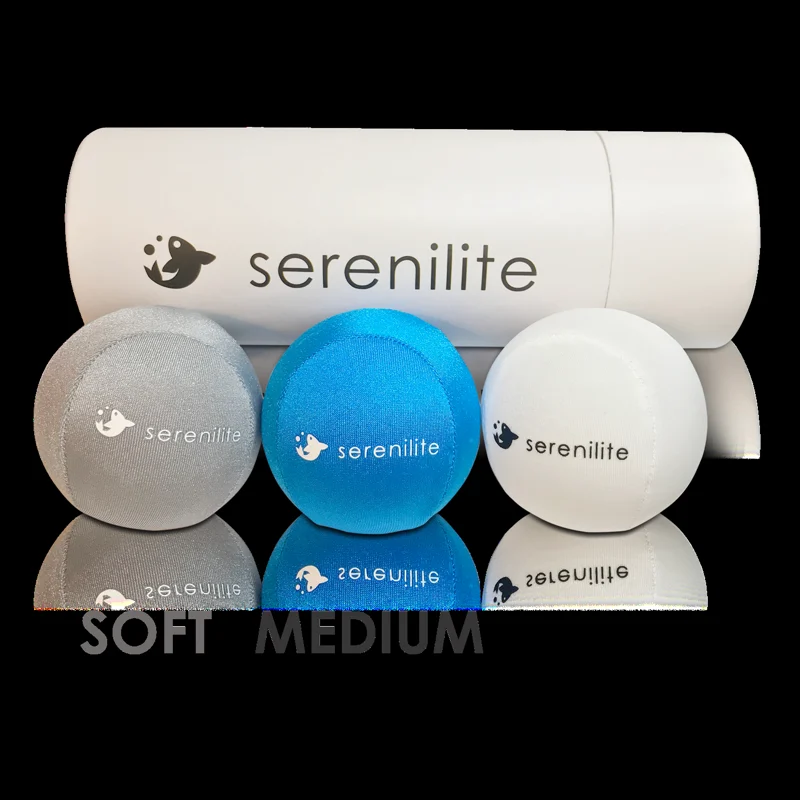
| Serenilite Tri-Density Stress Ball Bundle → | For comparing three resistance levels | Fabric covering and gel filling need care. Resistance is not a medical prescription. |
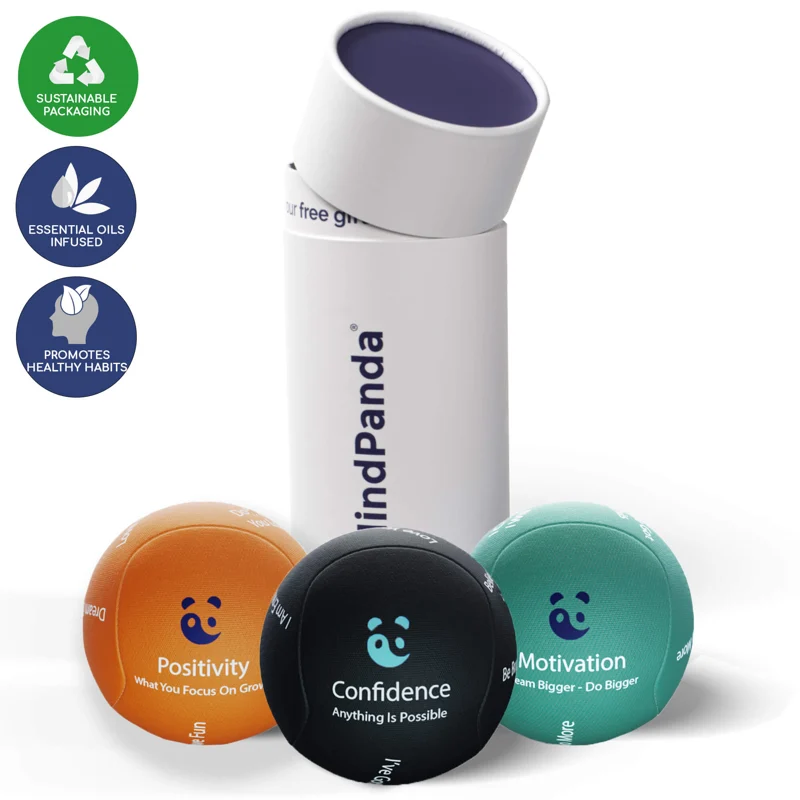
| MindPanda Multi-Density Stress Balls → | For a scented, fabric-covered squeeze | Scent may be unwelcome. Amazon combines pack variants: check the chosen pack and matching photo. |
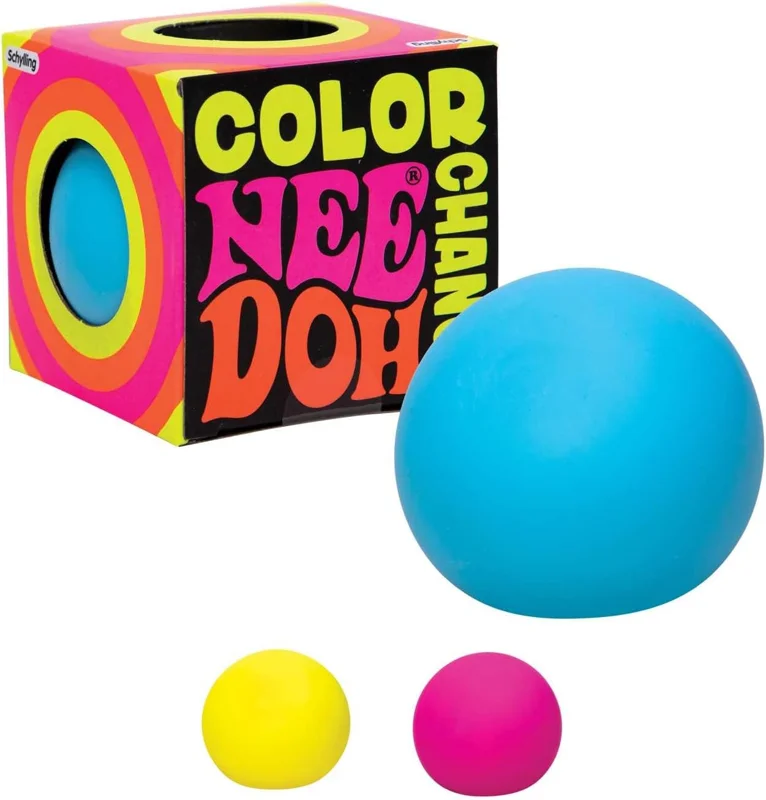
| Schylling NeeDoh Color Change → | For a squeeze with a visible colour change | Visual changes can draw attention. Colours vary and fillings can leak if damaged. |
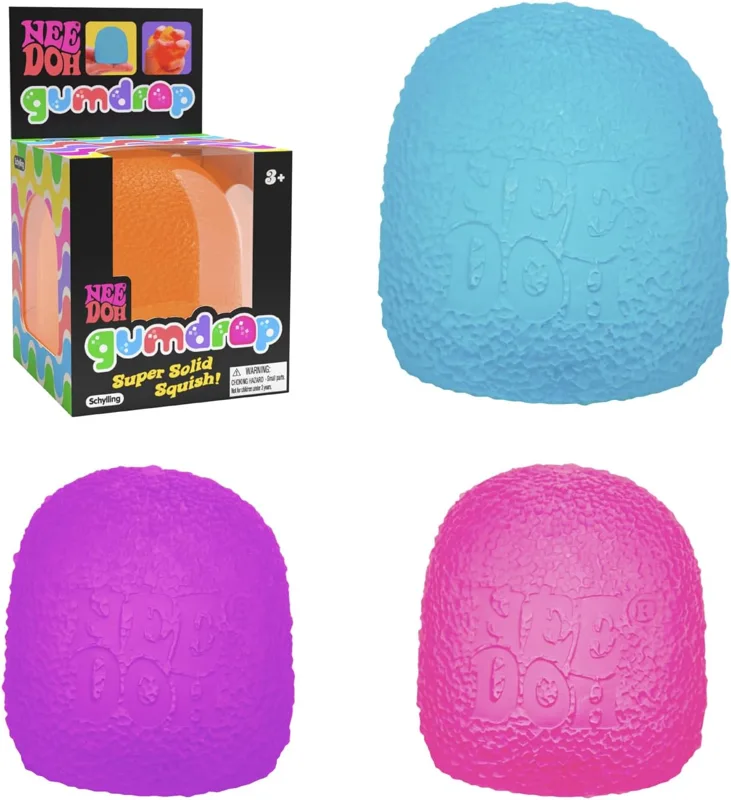
| Schylling NeeDoh Gumdrop → | For a textured squeeze with a gumdrop shape | Colour varies. Check seams and discard if damaged. The maker warns against heating, freezing or microwaving. |
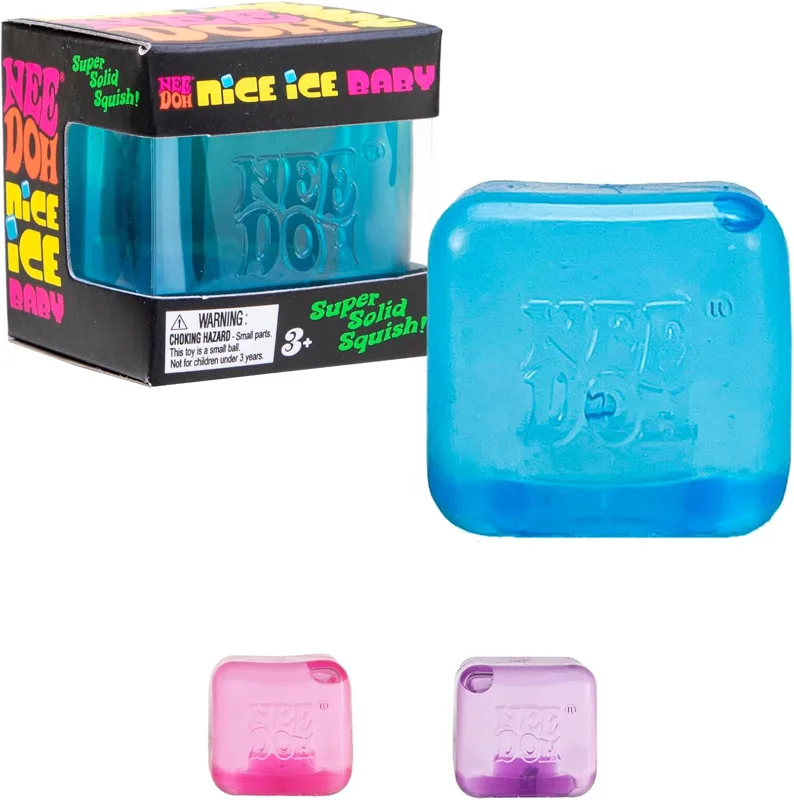
| Schylling NeeDoh Nice Ice Baby → | For a smaller cube-shaped squeeze than the Nice Cube | Small size needs particular care around mouthing and younger children. Retailer and maker size descriptions differ; check the exact pack. |
| Speks Gump Stress Ball → | For a rounded gel squeeze instead of a cube | A soft shell can tear or leak if damaged. Compare the selected colour and size with the Jumbo and Mini versions. |
| Speks Gump Mini → | For a smaller Gump squeeze that takes less space | Small toys need supervision around anyone who mouths objects. Check pack contents and variant before ordering. |
| Crayola Globbles 3-Pack → | For a small sticky squeeze toy | Sticky surfaces collect dust and may mark unsuitable surfaces. Follow cleaning instructions and check the exact pack size. |
| IMPRESA Squishy Stress Ball Set → | For a simple soft squeeze set without fabric covers | Inspect the shell for damage and keep filling away from mouths. Supplier durability language is not an independent test. |
| Speks Jumbo Gump → | For a larger gel-filled squish | Jumbo size may need two hands. Inspect the shell for tears and discard if filling leaks. |
Terms used in this guide: Resistance · Rebound.
What matters when choosing a stress ball?
- Firmness and recovery speed
- A slow-return filling changes shape gradually; a springier ball rebounds sooner. Choose a resistance you can repeat without discomfort.
- Filling and seams
- Check the exact filling and allergy information. Inspect seams and stop using a ball if the shell tears or leaks.
- Size in your hand
- Compare the stated dimensions with your palm. A jumbo squeeze toy can occupy both hands; a smaller ball offers a different grip.
For kneading rather than repeated squeezing: fidget putty →. For shared spaces, check how to assess sound →.
Movement and sound
The main action is squeeze. Sound: usually quiet. These descriptions are practical category guidance, not measurements of every product. Construction, force and the surface underneath change the experience.
Soft squeeze or exercise resistance?
A slow squishy toy and a firm resistance ball serve different preferences. Decide whether you want easy deformation, a sustained squeeze or gradual hand exercise. Stop if squeezing hurts. For rehabilitation, use an individually recommended resistance rather than a retailer’s general promise.
Look beyond the shape
Some popular squeeze tools are cubes rather than balls. Roundness is less important than hand fit, return speed and filling. A cover that looks intact can still hide a seam that is weakening. Inspect after use and avoid heat, sharp objects and stretching beyond the maker’s instructions.
When a squeeze ball is the wrong fit
If you need both hands for typing, keep squeezing for a break rather than making the task harder. If the filling attracts your eyes or squeezing causes discomfort, try a textured surface or a different movement. Read the anxiety evidence guide before interpreting comfort as treatment.
Where this type might fit
A squeeze occupies the hand until you put the object down. Compare resistance and return speed during a break first; if the next task needs both hands, choose a place to set it down before starting.
What to check before buying
Check filling, seams and latex information. Discard leaking balls.
- Compare the exact model’s dimensions and construction.
- Read age labels and small-parts warnings.
- Check care instructions and the seller’s return policy.
Try before you collect
Start with one object or borrow an appropriate clean tool. Compare similar tasks with and without it. Record comfort, interruptions and task completion. You do not need to keep using something simply because it is described as a sensory tool.
Keep reading
Child safety · Cleaning guide · What studies can tell us
Stress ball picks for different preferences
Selected for different preferences and documented features, not ranked by clinical benefit. We have not hands-on tested these products. Amazon links open Amazon.com; seller, price and availability can change.
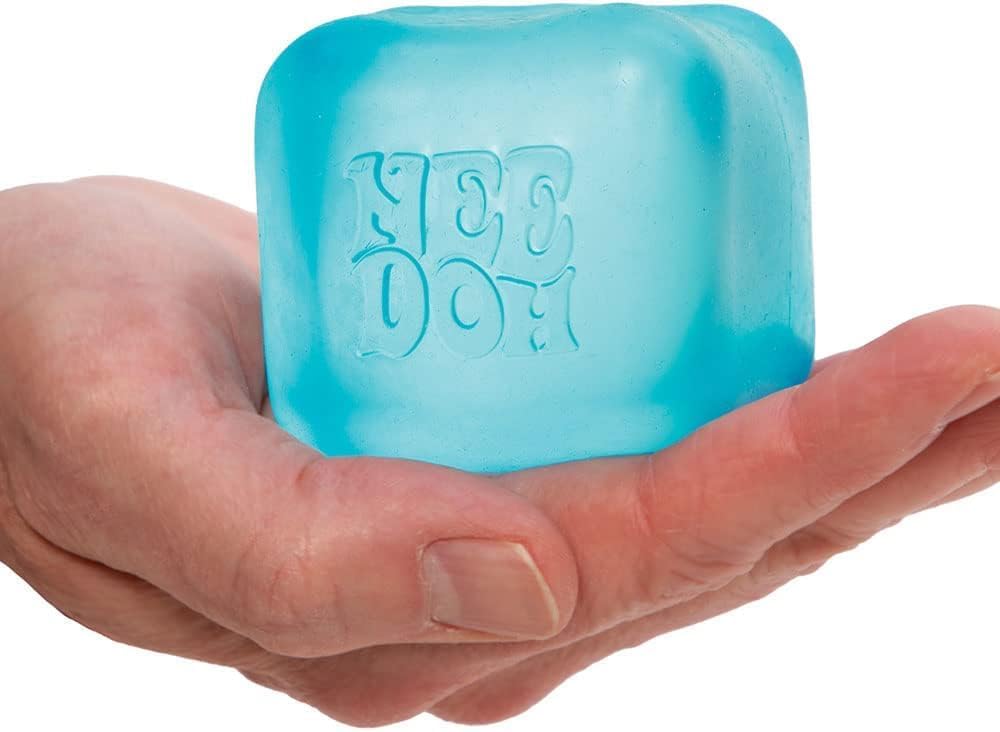
Schylling NeeDoh Nice Cube
Features, sources and buying details →View on Amazon ↗Specification source ↗Slow-rise foam versus filled squeeze toys
Foam squishies deform and return toward their shape; filled balls depend on both their outer skin and contents. Compare rebound, grip and cleaning instructions for the exact product. Slow-rise is a description to verify, not a standard recovery-time rating. Foam can tear and coatings may wear; a filled toy can leak. Neither construction is automatically washable, safe to mouth or suitable for a particular age.
Choose by the squeeze you want
Start with the hand movement, then compare the exact shape and resistance. If you prefer a dense, slow squeeze, look at the NeeDoh Nice Cube. If you want to compare several resistance options, check the contents of the Serenilite Tri-Density set. Resistance labels are useful within a set. They do not establish equivalent force across brands.
If the toy is for shared use, check the cleaning instructions and inspect the surface before passing it to someone else. See care for sticky or leaking squeeze toys.
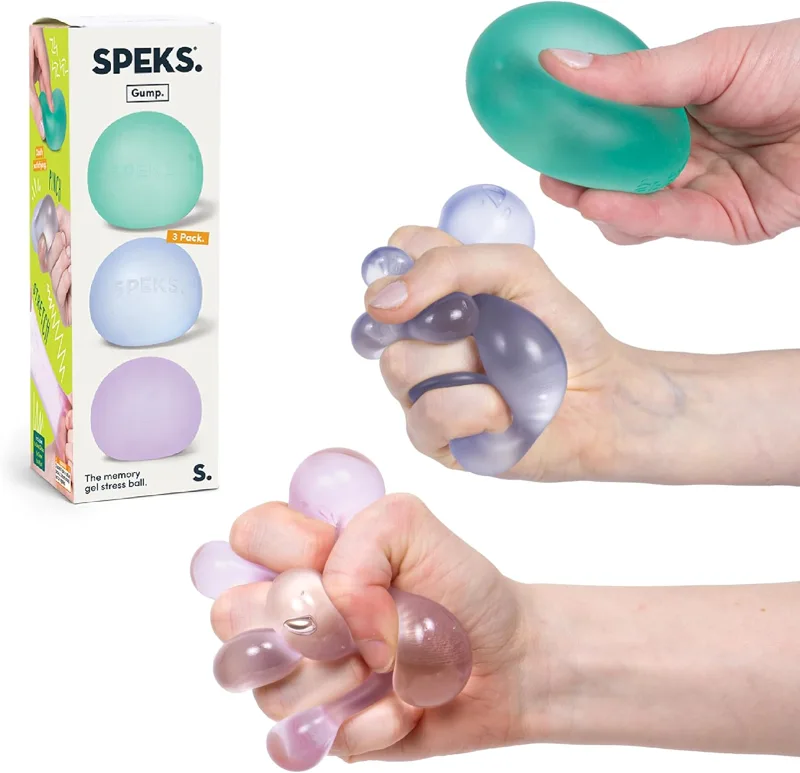
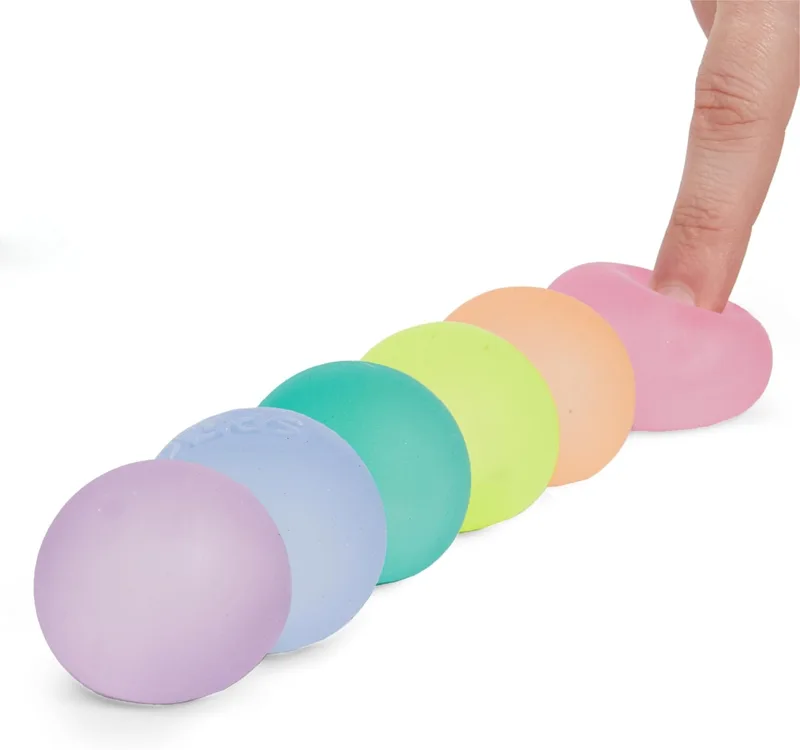
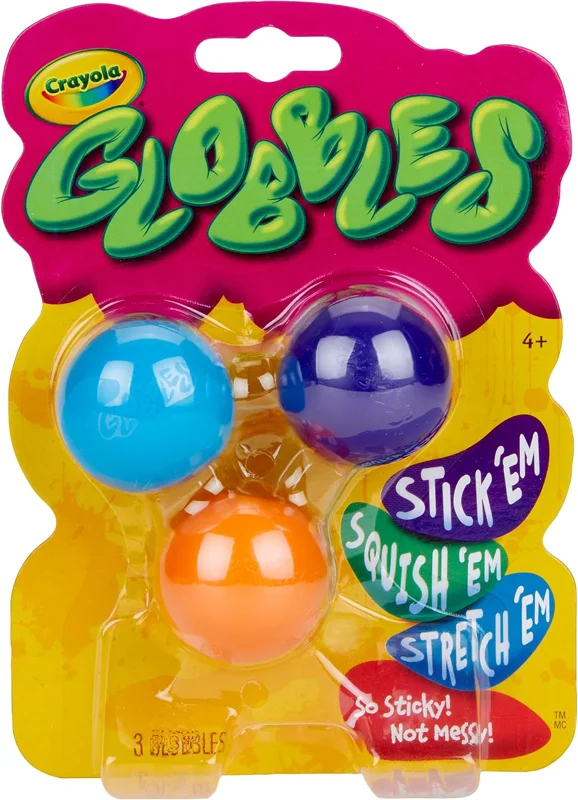
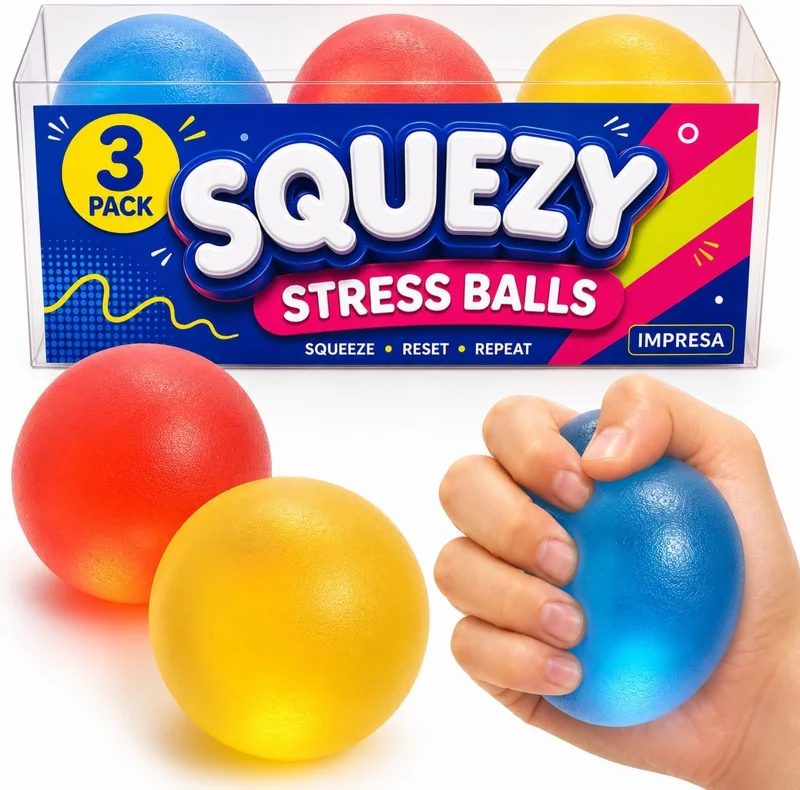
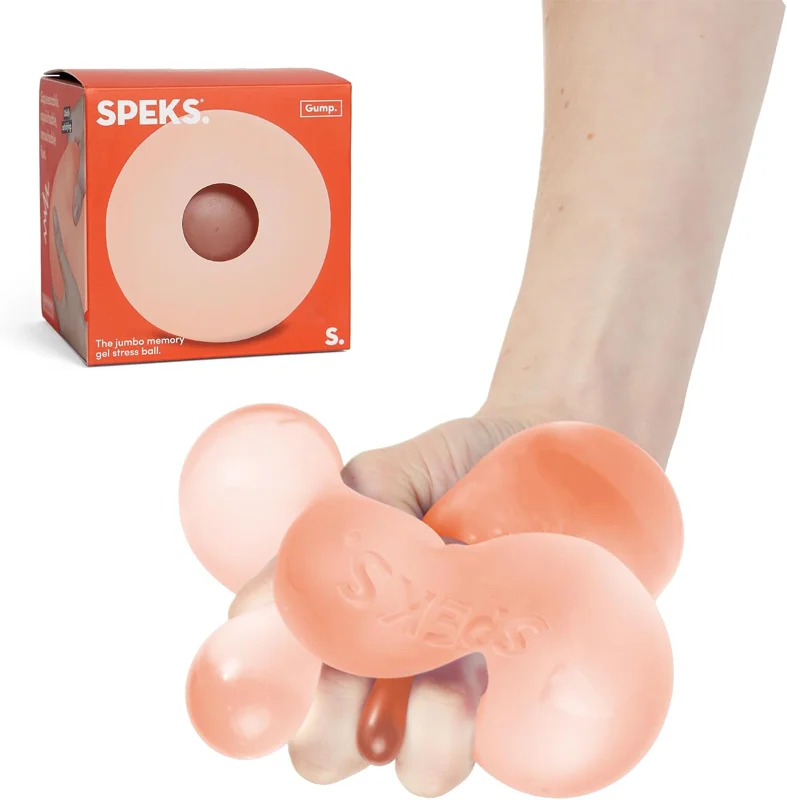
Plain retailer links, with no affiliate tracking in this version. Photos are manufacturer or retailer images; colours and pack contents vary by listing. See individual product profiles for specification check dates.
Relevant research and sources
Read the studies and their limitations
The Effect of Stress Ball on Anxiety and Pain Levels in Angiography: A Randomized Controlled Trial ↗
The stress-ball group had lower post-procedure anxiety and a smaller increase in pain scores.
The limit: A short medical-procedure study does not establish benefits for everyday anxiety, ADHD or a particular retail product.
The effect of a stress ball on pain and anxiety during sharp debridement in patients with diabetic foot ulcers ↗
Access scope: PubMed abstract checked 2 November 2026. Full-text methods were not reviewed; the findings concern a single-centre clinical procedure.
Pain scores were lower during and after debridement, and anxiety scores were lower after the procedure in the stress-ball group.
The limit: A specific clinical procedure and patient group; it does not show that retail stress balls treat anxiety disorders or help concentration.
Using Fidget Spinners and Stress Balls Do Not Impact College Introductory Psychology Test Scores ↗
Access scope: publisher abstract checked 2 November 2026. It describes three minutes of use before a test, not use during study or the test itself.
The groups did not differ significantly in test scores.
The limit: Brief pre-test use differs from using a tool during studying. A nonsignificant finding does not prove exact equivalence, and this single study is not decisive.
The Effects of Stress Ball Practice on Patient Anxiety, Pain and Vital Signs During Cataract Surgery: A Randomized Controlled Trial ↗
The stress-ball group reported lower pain and anxiety; several vital-sign measures were lower, but oxygen saturation did not differ significantly.
The limit: A single clinical procedure; it does not demonstrate benefits for exams, chronic anxiety or a named retail product.
A Meta-Analysis of Fidget Devices as Academic and Behavioral Interventions ↗
Access scope: published abstract. Full-text review methods were not independently assessed for this summary.
The pooled effect was close to zero (Hedges’ g = -0.014), with substantial differences between individual study effects.
The limit: The pooled result combines different devices and outcomes. It does not rank retail toys or establish a benefit for an individual student. This summary is based on the published abstract.
These studies do not test or endorse the commercial products shown on this page.